Explore · Stay · Experience · Support Local India's #1 Platform for Himachal Pradesh

Last Updated on 19/09/2026
Kullu Dussehra, a week-long international festival held in Himachal Pradesh, is all set to take place from October 20 to October 26, 2026, at the famous Dhalpur Maidan in Kullu. Beginning on Vijayadashami (the tenth day of the rising moon), this festival will last for seven days.
Kullu Dussehra is famous across India and is truly one of the most vibrant and unique celebrations of this festival. Unlike other regions in the country, where Dussehra is a one-day festival that involves the burning of Ravana’s effigies, in the Valley of Gods, it begins on Vijaydashmi and continues for a week. For seven days, visitors witness the grand display of culture and tradition here. If you want to experience the colorful rituals of Dev Bhoomi Himachal, you must plan your trip to the Valley of Gods during this 7-day celebration of Dussehra in 2026. Keep reading to learn more about this unique celebration in the stunning Himalayan valley, from its history to the traditions involved.
Table of Contents
Why Kullu Dussehra Stands Apart
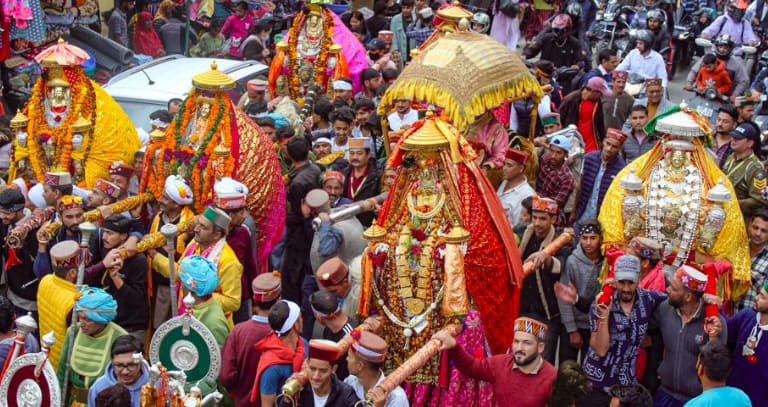
Unlike any other Dussehra celebration in India, in Kullu, this festival is celebrated for an entire week. In most regions, it is celebrated for a single day with the burning of Ravana’s effigy. However, in the Valley of Gods, this festival is dedicated to Lord Raghunath, the main deity of this beautiful valley. During Kullu Dussehra, his idol is carried in a colorful and grand chariot procession through the festival grounds.
Another unique feature of this festival is the gathering of more than 300 local deities. Devis and Devtas from surrounding villages gather in Kullu to pay respect to Lord Raghunath. Today, this 7-day celebration is popular worldwide, attracting performers and tourists from various countries. From the record-breaking Lalrhi National to performances by international groups, there is so much visitors can enjoy. Moreover, visitors can also shop for Himachali handicrafts and local products, and enjoy the famous foods of the region.
The Legend Behind Kullu Dussehra
The legend behind Kullu Dussehra is linked with Raja Jagat Singh, who was the ruler of Kullu between 1637 and 1662. The king was powerful and respected, but an act of greed led to a big misfortune in his life. He ordered a poor Brahmin, Durgadatta, from Tipri village, to hand over his pearls or face death. But the truth was that Durgadatta did not possess material pearls; instead, he had pearls of knowledge and virtue. He committed suicide by setting himself on fire and cursed the king. The priest cursed that the king would see rice worms and water as blood.
As a result of the curse of Brahmahatya, insects began to appear in his food, the water looked like blood, and the king also suffered from leprosy. This curse made his life extremely difficult, and he went to seek advice from a revered saint named Krishna Das Payhari. The saint from the Vaishnav tradition used to live near the town at a place called Bheeri. Among locals, he was popularly known as Fuhari Baba. The king went to him to seek relief for his unbearable pains and illness. Baba used his strong spiritual powers to cure his problems, and the king’s food stopped showing insects, and water no longer appeared like blood.
The king was truly impressed by this miracle done by Fuhari Baba, and he became his disciple. Baba gave him an idol of Lord Narasimha, which the king installed on the royal throne. The king began serving the idol as the chief caretaker. Baba also advised the king to bring the idols of Lord Ramachandra and Goddess Sita from the Tretanath Temple in Ayodhya. These were the idols that Lord Rama himself had made for the Ashwamedha Yajna and were only the size of a thumb.
Based on Vedic tradition, whenever an idol of a person is made, it should be of thumb size. This is because the soul is considered to be of that size. These idols are kept behind a curtain, as the soul itself cannot be seen.
Fuhari Baba sent his disciple Pandit Damodardas Gosain, who was staying with the king of Suket, now Sundernagar, to bring them from Ayodhya. He watched the temple rituals for a year and then brought the idols at the right time. These idols were placed at the holy site of Manikaran. The legend says that they started following the same rituals in Ayodhya. The king performed daily worship and drank the Charan-Amrit (holy water from the deity’s feet). After some time, a miracle occurred, and he was cured of leprosy.
After overcoming the terrible curse of leprosy, Raja Jagat Singh dedicated his entire kingdom to Lord Raghunath and started serving the deity as his servant. At that time, Lord Raghunath was declared the main deity of the Kullu Valley (Valley of Gods). Devi Devtas from nearby villages arrived at Kullu to have a glimpse of the Lord Raghunath idol after hearing about this miracle. In 1660, the grand Shri Raghunath temple was built at Sultanpur, and the idols were enshrined there.
The tradition that began as worship of Lord Rama as the main deity in Kullu today has grown into this stunning and grand 7-day-long celebration. Today, the same rituals continue in the Dhalpur Maidan. During Kullu Dussehra, more than 300 village gods and goddesses gather every year to pay their respects to their main deity, Lord Raghunath.
Rituals and Celebrations Across Seven Days
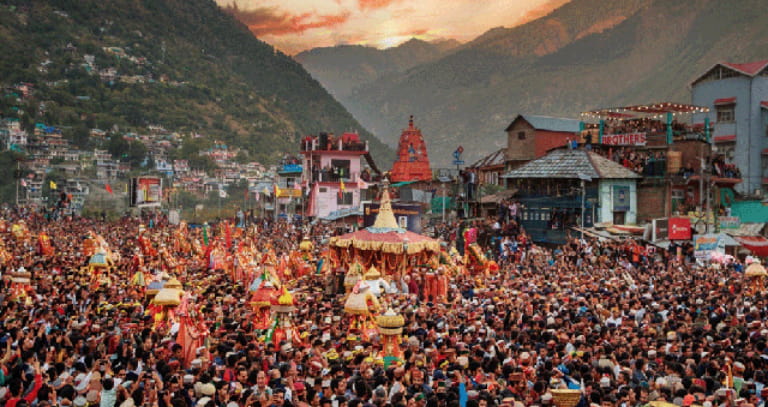
As we discussed above, the celebration of Dussehra in Kullu lasts for 7 days. Several rituals and celebrations can be witnessed by visitors across 7 days that highlight the region’s grand culture and unique traditions.
Day 1: Rath Yatra of Lord Raghunath
Kullu Dusshera begins on Vijaydashmi with the grand chariot procession of Lord Raghunath from Dhalpur ground. The chariot is only pulled after receiving permission from Bhekhali Mata. A flag is first hoisted at Mata Bhekali’s temple, and then the Rath is moved. This ritual marks the start of the 7-day-long celebration of this festival in the valley.
Days 2–5: Arrival of Devtas
On day 2, local deities from surrounding villages arrive at Dhalpur ground. Each Devi and Devta is accompanied by its own musical band and hundreds of followers. All of them visit Lord Raghunath to pay respect to him. During the festival, the Dhalpur witnesses the majestic gathering of deities. Deities are welcomed and offered gifts by the locals.
Day 6: Dev Samagam
Day 6 of the Kullu Dussehra celebration is very special, as local deities assemble with their devotees for Dev Samagam in Dhalpur Maidan. This day is filled with traditional music, devotional songs, and several communal rituals.
Day 7: Farewell and Sacred Rituals
On the final day, the Rath of Lord Raghunath is taken to the Beas River. After that, the ritual of burning a pile of dried bushes and wood, which represents the burning of Lanka, is performed. Following the rituals, the idol of Kullu’s main deity returns to its temple.
Kullu Dussehra 2026: Traditions That Evolved Over Time
The festival that began in the 17th century to lift a royal curse today is a grand, globally famous celebration. This grand event is marked by the participation of Raja, local deities, and traditional music, and several village-level rituals. In the past, blessed rice or shesh was distributed as an invitation to the deities. However, today, the local administration sends formal invitations to the local deities.
1. Natti & Its Transformation
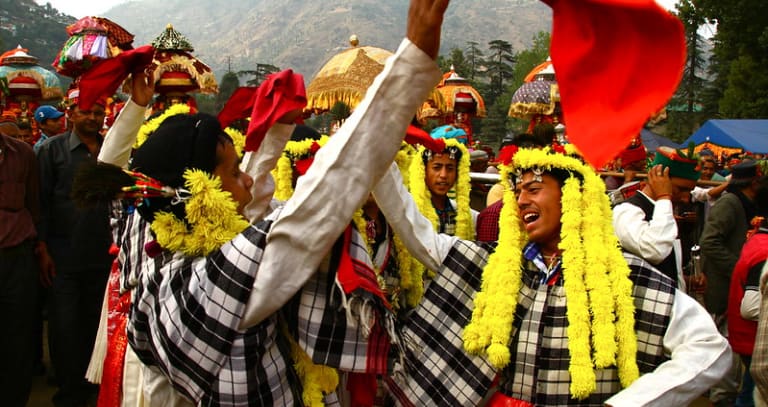
Undoubtedly, the celebration of the Kullu Dussehra festival has become more vibrant now, but it has also lost some traditional customs. Natti, a Himachali folk dance, used to be the main form of entertainment for attendees. Previously, men and women used to express their emotions through this dance form. Even today, the dance is still performed, but on a very large scale. Unlike before, when it used to take place in Dhalpur ground under the moonlight near the devotees’ tents, now it is held in Kala Kendra only. This shift has made the loss of this ritual the original local charm.
2. Local Handicrafts & Market Shifts
When the Kullu Dusshera celebration began, it was limited to Kullu only. In the past, locals from surrounding villages used to arrive in Dhalpur Maidan with their deities. They used to sell their harvested crops or local handicrafts. However, today, this festival has become a major commercial event and features the selling of several types of goods from around the world, including clothes, electronics, and other items.
3. Management Changes
Earlier, Kullu Dussehra was celebrated under the guidance of the king. But today, it is managed by Kardar Sangh and the district administration. They arrange spaces for each deity and their followers, provide accommodation, and also help them with travel expenses. Unlike before, when devotees used to carry deities on foot, now some deities are transported from their villages to the town in vehicles. Only after reaching the town are they placed in palanquins. However, many still carry their deities on foot from their villages.
Kullu Dussehra and Its Economic Impact
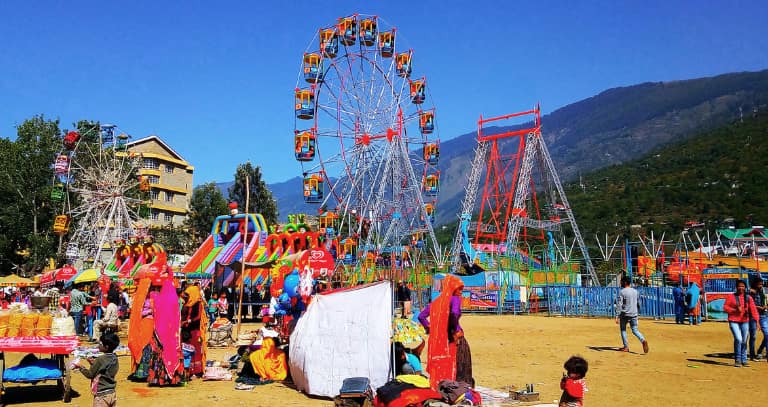
Kullu Dussehra has grown into an international fair and has significantly contributed to boosting the local economy. This week-long celebration attracts tourists not only from India but also from abroad. This large influx of visitors has created better opportunities for the local hospitality businesses, including hotels, travel service providers, and restaurants. It helps local artisans to sell their unique handmade items to a wider audience. Moreover, this festival also provides several temporary employment opportunities in areas like event management, sales, transportation, and tourism.
Kullu Dussehra: A Living Heritage of Faith and Festivity
Kullu Dussehra is no longer limited to Dev Bhoomi only, as it has evolved into an international fair, highlighting the perfect blend of culture, devotion, and commerce. From the grand Rath Yatra of Lord Raghunath to the gathering of local deities and vibrant folk performances, this week-long festival offers a unique glimpse into Himachal’s rich heritage. This festival is a platform that promotes the local culture on an international stage. If you are seeking memorable experiences during your Himachal trip, Kullu Dussehra 2026 is a great option. This unique celebration of faith and Himalayan tradition will help you make unforgettable memories.
Also Read – Dhauladhar Mountain Range in Himachal Pradesh – The Stunning Himalayan Beauty