Explore · Stay · Experience · Support Local India's #1 Platform for Himachal Pradesh

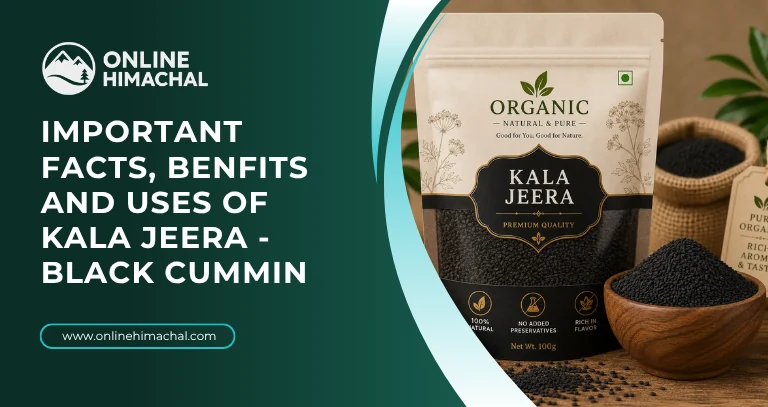
Kala jeera is also known as Bunium persicum. It is a rare, dark, crescent-shaped spice, used in many traditional South Asian and Middle Eastern medicines. Rich in antioxidants and essential minerals, it serves as a great remedy for digestion, respiratory health, and controlling blood sugar levels.
Kala jeera (Bunium persicum) is harvested from the high-altitude, northwestern regions of the Great Himalayas. This rare spice is naturally grown in the cold and dry mountains and is known for its distinctive aroma, rich flavor, and long history of use across South Asian cultures. Beyond just a kitchen spice, these small seeds are packed with essential compounds and antioxidants, making them potentially beneficial in wellness practices.
Table of Contents
Kala Jeera: An Overview
Kala jeera is a wild and rare spice found in the high-altitude Himalayan regions. It is also known as Bunium persicum and is known for its strong, earthy, and smoky flavor profile. These crescent-shaped seeds offer a nutty and distinctive peppery taste when cooked with rice dishes, curry, and other combinations.
Important Facts of Kala Jeera
Here are the important facts about Black Cumin (kala jeera) that you should be aware of:
1. Kala Jeera is a Different Spice Species
Kala jeera is a distinctive species of spice, which, in scientific and agricultural terms, is also known as Bunium persicum. People often confuse it with kalonji (nigella seeds or Nigella sativa). This is mainly because kala jeera is a regional name for kalonji in the Bengali language, and both are loosely translated as black cumin, therefore creating such huge confusion.
2. High-Value Crop in Western Himalayas
Kala jeera is considered a highly important crop in the Western Himalayas because of its traditional roots and widespread use across local mountain communities. Particularly in Himachal Pradesh, Jammu and Kashmir, and certain parts of Uttarakhand, this spice is often referred to as the “black gold” due to its rarity.
3. Contains Many Volatile Compounds
Kala jeera, or Himalayan black zira, contains many important volatile compounds, including:
- p-cymene
- γ-terpinene
- cumin aldehyde and cuminaldehyde
- γ-terpinen-7-al
Note: The proportions of these volatile compounds vary according to origin and growing conditions.
4. Documented History of Usage
Kala jeera has a long traditional history of use in South Asian, Persian, and Iranian medicinal and culinary traditions to treat various health issues, such as indigestion, bloating, and diarrhea.
5. A Perennial Crop
Kala jeera is a perennial crop, meaning it lives for multiple years and grows back from underground tubers under the right conditions.
Benefits of Using Kala Jeera
Look at the potential health benefits of Kala Jeera:
- Stomach Health: Kala jeera has traditionally been used as a carminative and digestive aid for complaints such as bloating and stomach discomfort.
- Lower Blood Sugar: Preliminary research suggests that kala jeera may have some effects on blood glucose regulation.
- Reduces Inflammation: Kala jeera has anti-inflammatory properties that are beneficial for reducing inflammation in the body.
- Immune Health: Kala jeera also boosts your immunity by protecting cells from damage.
- Respiratory Health: Kala jeera is widely used traditionally to ease a mild cough and other respiratory issues.
- Skin and Hair Health: It is also used in various remedies, as it is believed to provide benefits for skin and hair health.
Common Uses of Kala Jeera
Kala jeera is a traditional spice that is widely used in various South Asian and Middle Eastern dishes. It has become an essential element of cooking, as it adds a deep, nutty flavor to dishes, especially curry rice, biryani, and tadka combinations.
Here are the common culinary uses of Kala Jeera:
| Culinary use | Description | Where it is Used |
| Rice Dishes | Used as a whole aromatic spice to create a unique fragrance and flavor. | Pulao, biryani and regional rice dishes |
| Curries and Savory Dishes | Used whole or ground as a flavouring spice. | Regional vegetable, lentil and meat preparations |
| Tempering and Cooking | Whole fruits may be fried in oil or ghee to release their aroma. | Dal, vegetable and other savoury preparations |
| Meat Dishes | Used as an aromatic spice in traditional meat preparations in some regions. | Regional mutton and other meat dishes |
| Spice Combinations | Ground or combined with other aromatic spices. | Regional spice mixtures and masalas |
| Food Flavoring | Used as a flavour enhancer because of its strong aromatic profile. | Various savoury foods |
| Traditional Regional Cuisine | Used according to local culinary traditions in Himalayan and other regions. | Regional dishes and preparations |
Precautions Regarding the Usage of Kala Jeera
Things to keep in mind before consuming kala jeera:
- Pregnancy and Breastfeeding: Pregnant or breastfeeding women should consult a trusted healthcare practitioner before consuming kala jeera in medicinal or concentrated amounts.
- Blood Sugar Levels: According to preliminary research, Bunium persicum, or kala jeera, may have effects on blood sugar levels. Therefore, people who are taking diabetes medicines should consult their doctor before consumption.
- Surgery: Patients preparing for surgery should inform their healthcare professional or doctor about their use of kala jeera.
- Blood Pressure: People with hypertension may also consult a doctor before starting to consume kala jeera.
Conclusion
Kala jeera (Bunium persicum) is a high-altitude aromatic spice found in parts of the western Himalayas and West and Central Asia. It is often confused with kalongi (Nigella sativa); it can be recognized by its dark, crescent shape featuring an intense smoky aroma. It is used in delicious North Indian and Mughlai dishes and wellness remedies due to its potential health benefits.
Frequently Asked Questions:
1. What is kala jeera used for?
Kala jeera is used as a spice in cooking to add an earthy flavor to rice dishes, curry, and meat preparations.
2. Is kala jeera the same as kalonji?
No, kala jeera is completely different from kalonji.
3. Does kala jeera have health benefits?
Kala jeera has been used across cultures for various health benefits.
4. Does kala jeera help with stomach issues?
Kala jeera has been traditionally used for treating bloating and stomach discomfort.
5. What does kala jeera taste like?
Kala jeera has an earthy, smoky, and nutty flavor with distinctive peppery undertones
Also Read : Traditional Indian Foods That Are Naturally Rich in Protein