Explore · Stay · Experience · Support Local India's #1 Platform for Himachal Pradesh

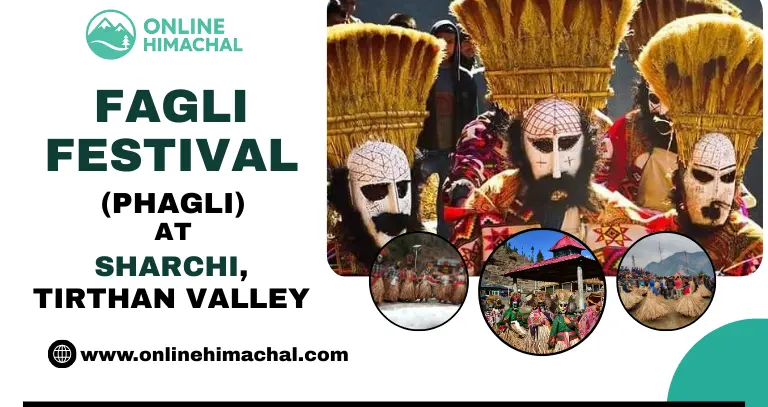
The Fagli festival in Sharchi is a traditional celebration in the Tirthan valley of Himachal Pradesh. It is particularly celebrated in the Shimla, Kinnaur, and Kullu districts. It is celebrated in February or March to welcome spring and end winter, and seek blessings for a good harvest. It is known for its masked dancers in traditional grass robes and wooden masks.
They perform ritualistic dances with drums that symbolize the victory of good over evil and pray for a good harvest. It created a unique cultural experience on snow-capped mountains. Thousands of people like to visit this festival. If you are also curious about this festival, then keep reading this blog. Here, we will know deeply about the Fagli festival at Sharachi.
Table of Contents
Key Aspect of Fagli Festival Sharchi
When the Fagli Festival Is Celebrated
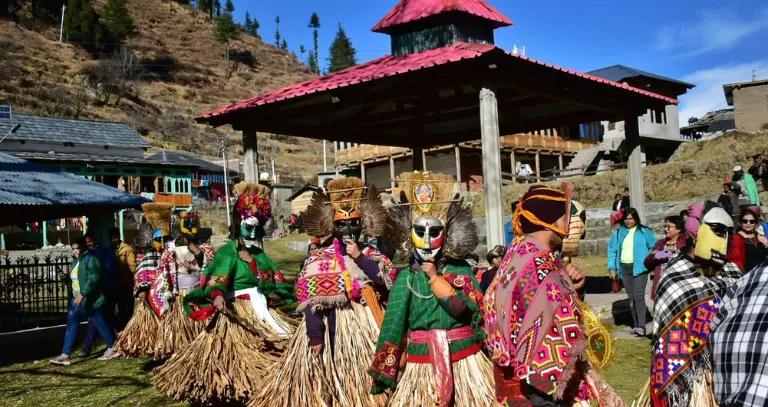
The Phagli Festival, or Fagli festival at Sharachi village is celebrated every year around the middle of February. It is a three-day celebration. But the exact date is based on the local lunar calendar and can go up and down slightly from village to village and year to year.
Where the Fagli Festival Is Celebrated
The Fagli festival Sharachi is celebrated in the Tirthan Valley of the Kullu district. It is an inner part of the Seraj region of the Indian state of Himachal Pradesh. This festival is also celebrated in other parts of the Tirthan Valley, such as Banjar and Jobhi. The wider Kullu, Kinnaur, and Lahaul also celebrate it, but with different local customs.
Fagli (Phaguli) Festival 2026: Date & Celebration Details
- Expected Dates: 3 to 6 March 2026
- Main Celebration Days: 4 and 5 March 2026
The Purpose of the Fagli Festival
The Fagli festival is held annually in February or March. It signifies the transition from the harsh winter to the comfortable spring. The main purpose of this festival is to seek the blessings of local deities for a great and fruitful harvest in the coming year. The rituals are deeply rooted in local mythology and folklore, believed to celebrate the victory of good over evil. The masked dances are intended to banish evil forces and ensure the community’s well-being and prosperity. The festival aslo serves as a vital platform for social interaction and strengthens the bond between villagers.
Traditions of the Fagli Festival
1. Masked Dancers
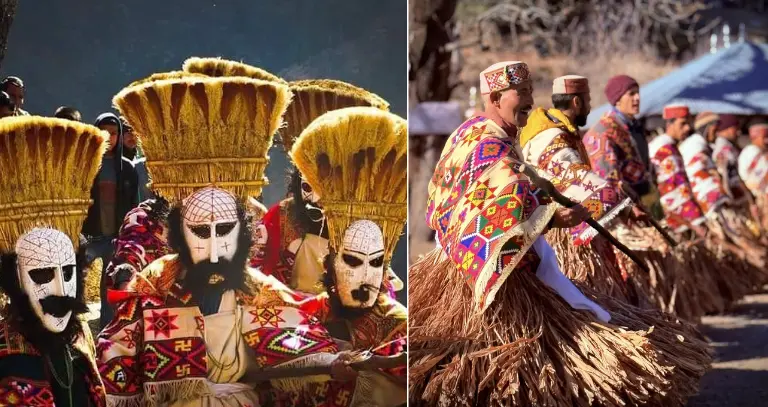
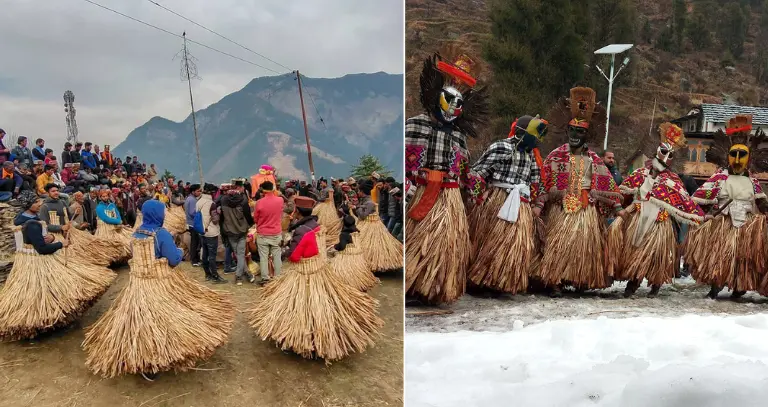
The masked dancers of the Fagli festival Sharachi, are a central part of this festival. Dancers wear unique wooden masks, colourful robes, floral headgear, and different skirts made from dry grass to perform the ritualistic phagli dance. They represent deities and demons and perform to scare them away. The dances involve energetic moments, playing drums, and sometimes chanting and shouting to ward off negativity. This tradition is a vital part of local folklore.
2. Ritualistic Dances
In the Fagli festival, only men can participate in the main ritualistic dances. They wear elaborate attire, including hand-carved wooden masks, a headpiece decorated with yellow flowers, and a robe made from dry grass. The masks are often passed down through generations and represent deities, animals, and mythical figures. The masked man dances all day long to the traditional music of drums and trumpets.
3. How to Experience It
To experience the Fegli festival Sharachi, you should plan a visit to the Sharachi village in the Tirthan Valley of Himachal Pradesh around mid-February. The festival marks the end of winter and the arrival of spring. It is a deeply traditional and offbeat cultural experience.
Tips to Attend the Fagli Festival Sharachi
To attend the Fagli festival at Sharachi, it is important to plan ahead, respect local customs, and prepare for the cold weather conditions in mid-February.
1. Plan Your Visit
- Confirm Dates: The festival is usually celebrated in mid-February, but dates are decided by the local lunar calendar, so they can be different. You can ask local homestay owners or check social media pages for the exact dates in villages like Sharachi and Jobhi.
- Book In Advance: You should secure your stay at a homestay or resort in advance because the popular villages like Sharachi and Jodhi get crowded during this festival.
- Select Location: The festival is celebrated in different places of the Kullu district, so you should select the location before booking.
2. Respect Local Culture and Traditions
- Wear modest clothes when visiting temples and participating in events. Cover your knees and shoulders.
- Always ask for permission before taking photos or videos of the locals, especially of the masked dancers.
- Avoid getting too close to the dancers while they are performing their rituals.
- When you participate in the events, participate with a positive attitude. But be mindful of the divine nature of the festival.
3. What to Pack
- The Fagli festival is held in mid-February, so wear warm clothes, jackets, and comfortable shoes.
- Bring sunscreen, a power bank, and a raincoat or umbrella because rain can happen at any time.
- Ensure you are physically fit for walking and hiking, because some festival locations involve trekking from villages to temples.
- Snow can happen at any time, so plan your transportation accordingly. You can use private transport or public buses to reach the area, then rely on the local transport or walking.
4. Experiencing the Festival
- Witness the Dance: The traditional dance is the main part of the Fagli festival. It is performed by the men who dress up in dry grass and wooden masks to represent deities and demons.
- Local Food: You can enjoy the traditional Himachali food (Dhaam) at the local Dhabas or homestays. This is also a part of the cultural experiences.
- Interact with Locals: The people in the region are known for their kindness and hospitality. When you stay at the homestays, it gives you a great opportunity to interact with locals and understand their customs.
Conclusion
The Fagli festival, Himachal Pradesh is a vibrant and lively Himalayan festival of masks, dance, and traditions. It marks winter’s end and welcomes spring. People attend this festival because it offers a unique blend of deep-rooted cultural heritage and spiritual significance. It provides an offbeat and authentic experience away from typical tourist destinations. Therefore, its a once in a once in a lifetime experience, so you should surely not miss out on this prestigious event.
Also Read – Manali Winter Carnival 2026: Dates, Events & Travel Tips for First-Time Visitors