Explore · Stay · Experience · Support Local India's #1 Platform for Himachal Pradesh


Humpta Pass Trek! Located in the lush green valleys of Kullu, within the Pir Panjal range of the Himalayas. The trek connects two distinct landscapes: the Kullu Valley and Lahaul. This trek starts in Manali and ends in the Chatru village of the Spiti valley, showcasing various landscapes of mountain ranges and sceneries cloaked in greenery. In this guide to the Hampta Pass Trek, we will walk you through trek details, including when to go, what to prepare, and what you can expect to see during your trek.
Table of Contents
What is the Hampta Pass Trek
Hampta Pass Trek is a popular crossover trek that acts as a corridor between the Kullu Valley and the arid region of Lahaul. This trek is situated at an altitude of around 14,000 feet, carrying the most stunning backdrops of the Dhauladhar and Pir Panjal ranges.
This 26 km trek is most accessible in summer, naming it the Summer Trek. The summer season is considered perfect for this trek, which removes the scope for landsliding and the chilling nights of winter. This makes the season of summer favourable for the trek, and you can also see snow on the higher altitudes as you move forward on the trek.
Complete Step-by-Step Guide for Hampta Pass Trek
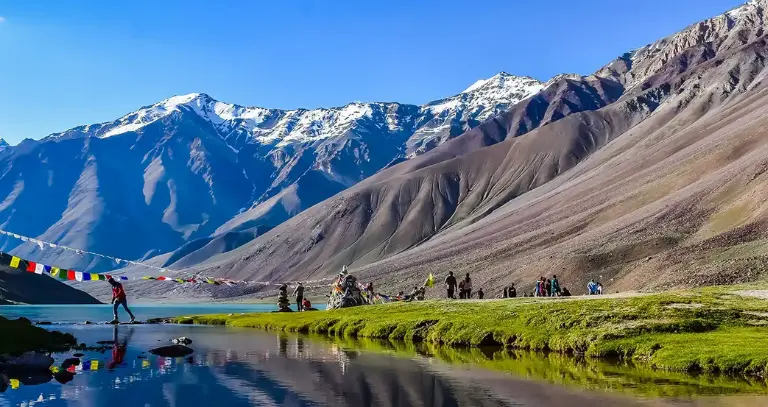
The Hampta Pass Trek is a relatively short trek with a moderate level of difficulty. It makes you feel chills as well as overwhelms you through the beauty you encounter during your trek. The step-by-step guide that includes instant goosebumps follows:
Day 1
The trek starts from Jobra, which is directly accessible from Manali. From Jobra, it shows a thriving, dense vegetation of pine, deodar, and maple trees.
Day 2
- From Jobra to the next destination, Chika, the trek covers a distance of 2 to 2.3 km. This route marks the entry at the higher altitude. From there, you can see the Rani Nallah river and wildflower meadows. The trek takes 1 to 1.5 hours to complete and is at an easy level of trekking. You can set up your camps and take some rest before moving forward.
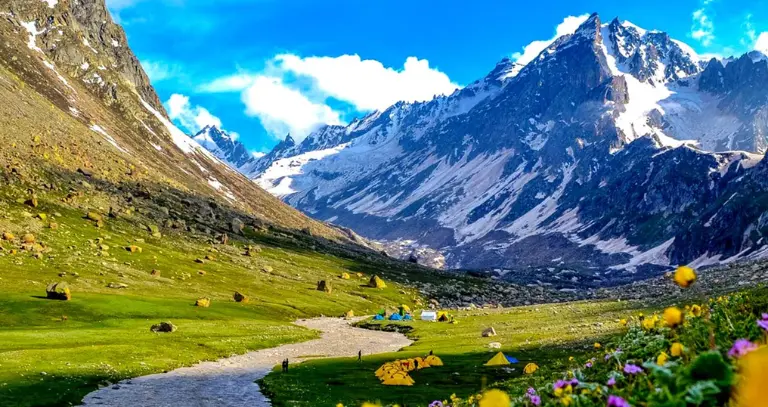
- When you move forward to Jwara from Chika, the terrain gets a little bit more challenging than it was before. In this region, you can observe a gradual change in the landscape. The trail gets a little difficult and sometimes rocky, offering views of cliffs and waterfalls, and the thrilling majestic mountain ranges, which makes you feel like a tiny insect gazing upon the giant nature.
Day 3
- Your next day starts from Jwara to Balu ka Gera. As you trek from Jwara, you see open meadows and wildflowers towards Balu ka Gera. This trek falls in moderate to easy levels, making temperatures cooler in higher altitudes. This place is a beautiful and peaceful site to have dinner or lunch.
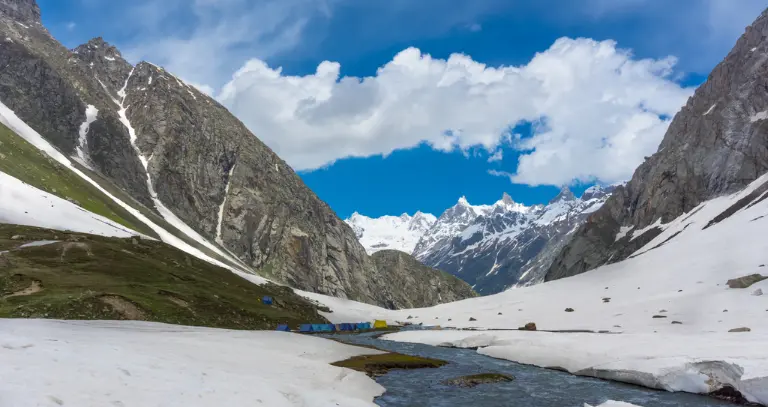
- After taking photos and birdwatching, your trek accompanies you to Hampta Pass. This is the most challenging part of the Hampta Pass Trek because of the altitude, which increases from 11,900 feet to 14,035 feet. The rugged terrain to the Pass includes rocky trails and snow patches.
- Now, you reach the summit point of Hampta Pass. From there, you can enjoy magnificent views of Mount Hanuman Tibba and the other two prominent ranges, Deo Tibba and Mt. Indrasan. You can see:
a). Abundant varieties of flora, including wildflowers of primulas, daisies, and the Himalayan blue poppy.
b). Animals, including the Himalayan Monal and musk deer.
Day 4
From there, the trek continues to the Shea Goru, the final leg of your trek before you descend to Chatru. In this part, you see the scenic views change dramatically to rugged mountains. At Shea Goru, you encounter a trail containing rocks, soil, and moraine, which lies at 12,900 feet. Ideal for campsites, you can enjoy the panoramic views of the Spiti Valley.
Day 5
The rocky terrains of Shea Goru lead you to Chatru (at 11,000 feet). The route involves moving alongside the river Chandr, offering cold and arid landscapes of the Lahaul region.
Day 6
The Hamta Pass Trek usually ends in Chatru, but some trekkers continue their journey to the Chandratal Lake. At a distance of 48 km from Chatru, the route takes around 2 to 4 hours to cover, depending on the conditions, like landslides.
Main Properties of the Hampta Pass Trek
Here are the properties you need to know before planning the Hampta Pass Trek:
- Starting Point: Manali or Jobra
- Total Duration: From 3 to 4 days
- Trek Height: The Peak is at around 14,000 feet
- Total Distance: From 26 to 35 km (except Chandrataal)
- Difficulty Level: Moderate
- Ideal Months to Trek Hampta Pass: Mid-May to Early-July
- Age Limit for the Trek: From 12 to 60
How to Reach for Hampta Pass Trek
- By Air: You can reach Manali directly from the Kullu Manali Airport. From there, it is around 50 km and can be covered by bus or a taxi ride. After reaching Manali, take a taxi to ascend to Jobra, which is 28 km away from the city.
- By Road: If you are travelling from Delhi, you can either take a direct flight or take NH 44, which takes around 12 to 13 hours to drive to Manali.
Best Time to Trek for Hampta Pass
- May to Early July: Ideal months for the Hampta Pass Trek as the route opens up for exploration.
- July to August: The trek in these monsoon months can be slippery, but on the non-rainy days, the landscape becomes so ethereal.
- September to October: Post-monsoon season, offering clear skies and autumn vibes with a little colder nights.
Trekking Essentials You Need for the Hampta Pass Trek
Note this list of gear and trekking essentials for a safe and comfortable Hampta Pass Trek:
- A high-quality 60 to 70-litre rucksack is necessary.
- Do consider sturdy hiking shoes.
- Carry your sleeping bags as well.
- Clothing essentials such as a down jacket, a fleece jacket, trekking pants, and thermal full-sleeved innerwear.
- A raincoat, a woollen hat and gloves.
- Trekking sticks or poles, torches, and water bottles.
- Hydration packs, energy drinks and a first-aid kit.
- A high SPF sunscreen, toothpaste and brush, as well as toilet paper.
- A charged power bank, mosquito repellent and non-perishable food items.
Wrapping up the Journey
The Hampta Pass Trek is an incredible opportunity for you to experience the natural beauty of Himachal Pradesh. Whether you are a bigger trekker or an expert one, this trek takes you to the breathtaking landscapes, waterfalls, and unforgettable views of the Pir Panjal ranges. With this guide, you can navigate your travel itinerary in detail, including how to get there, the best time to do it, and trekking essentials to ensure a safe trip.
Also Read – Kasol Travel Guide: Explore the Mini Israel of India