
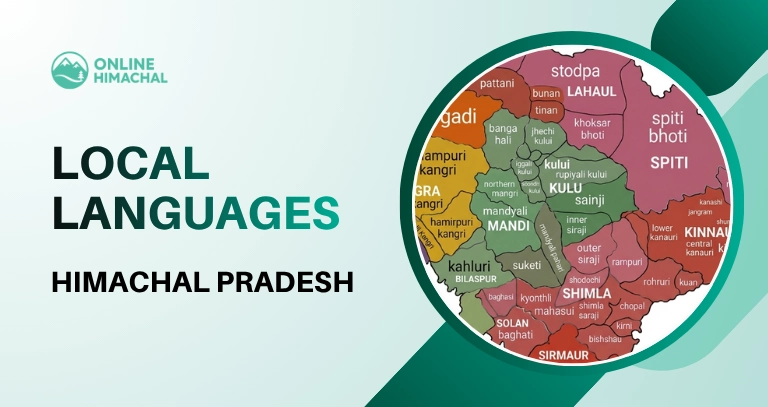
Himachal Pradesh has many local languages and dialects spoken in different regions. Kangri, Gaddi, Mandeali, Kullui, Kinnauri, Sirmauri, Chambeali, and Spiti Bhoti are some common examples. These languages show the state’s culture, traditions, and communities.
Himachal Pradesh is famous for its snowy mountains, beautiful valleys, and colourful traditions. However, there is much more to explore beyond its natural beauty. The state is also home to many local languages spoken in different regions. Kangri, Gaddi, Mandeali, Kullui, Kinnauri, Sirmauri, Chambeali, and Spiti Bhoti are some of them. Moreover, each region has its own way of speaking, which makes the culture of Himachal Pradesh even more interesting and special. Let’s take a closer look at the diverse local languages of Himachal Pradesh.
Table of Content
Why Do Local Languages Differ Across Himachal Pradesh?
The local languages of Himachal Pradesh are different in their words and the way of speaking. People from different districts may use different words for the same thing. For example, Kangri, Mandeali, Kullui, and Chambeali are spoken in different places of the state and have their own style.
Moreover, languages spoken in places like Lahaul, Spiti, and Kinnaur can sound very different from those spoken in the lower areas. This is because these places have different language backgrounds and have been influenced by nearby areas. Therefore, as you travel from one place to another, you will see changes in languages.
Languages Spoken Across Himachal Pradesh
The state has many local languages, and each region has its own way of speaking. So, let’s look at the languages spoken across different districts of Himachal Pradesh and learn what makes each region special.
| Sr. No. | District | Languages | Main Language |
|---|---|---|---|
| 1 | Kangra | Nurpuri Kangri, Palampuri Kangri, Hamirpuri Kangri, Unnavi Kangri | Kangri |
| 2 | Chamba | Pangwali, Churahi, Bharmouri, Chambyali, Gaddi, Gojri | Chambyali |
| 3 | Una | Doabi Punjabi | Doabi Punjabi |
| 4 | Bilaspur | Kahluri | Kahluri |
| 5 | Mandi | Mandyali or Northern Mandyali, Mandyali Pahari, Suketi | Mandyali |
| 6 | Kullu | Kullui, Inner Siraji, Sainji, Bangahali, Rupiyali Kului, Jhechi Kului | Kullui |
| 7 | Lahaul and Spiti | Mayar Bhoti, Pattani, Bunan, Tinan, Khoksar Bhoti, Stodpa, Spiti Bhoti | Spiti Bhoti |
| 8 | Kinnaur | Jangram, Lower Kanauri, Central Kanauri, Chitkuli Kanauri, Shumcho, Kinnauri, Nyamkat | Kinnauri |
| 9 | Shimla | Keonthali, Mahasu Pahadi, Shimla Saraji, Rampuri, Rohruri, Barari, Shodochi, Bishashau, Kuari | Mahasu Pahadi |
| 10 | Solan | Baghati, Handuri, Powadhi, Baghali / Baghilyani | Baghati |
| 11 | Sirmaur | Giripari Sirmauri, Dharthi Sirmauri, Sirmauri | Sirmauri |
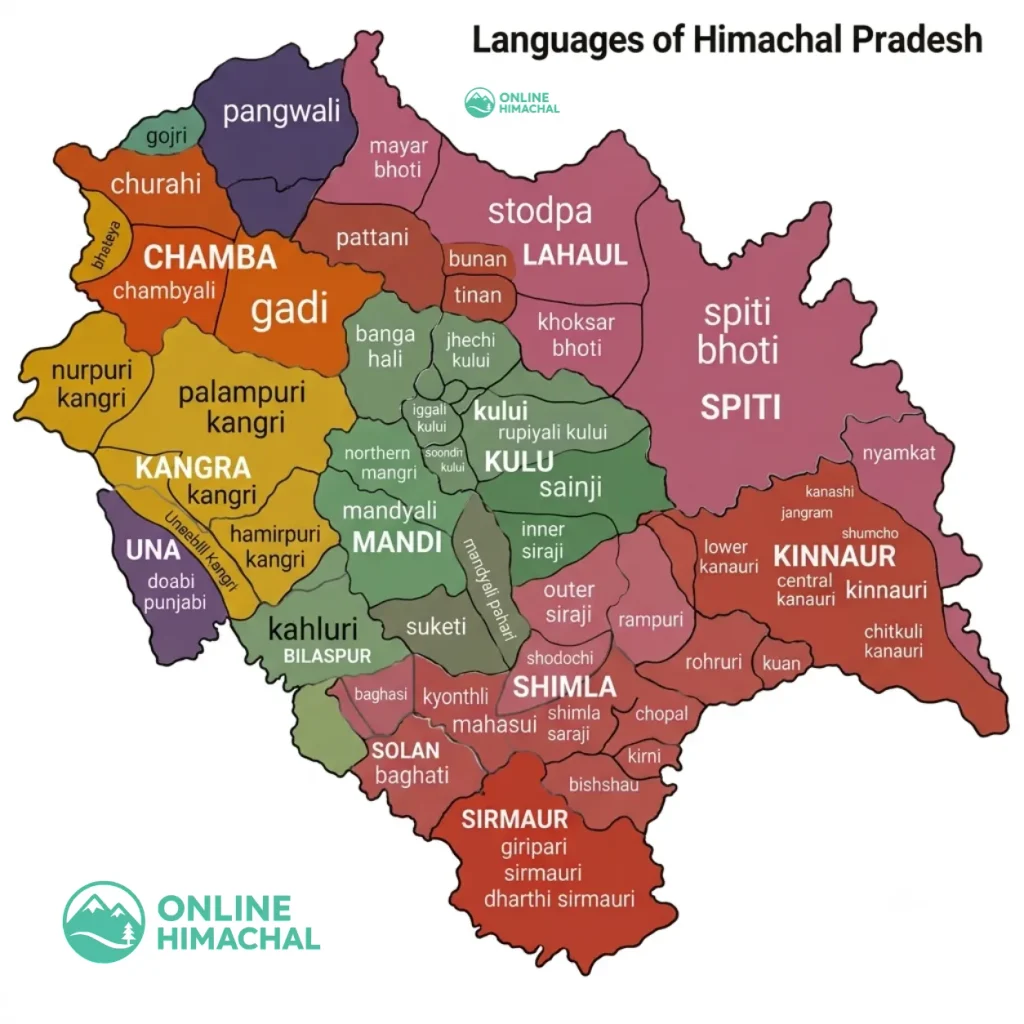
1. Kangra
Kangra has several local forms of Kangri. These varieties are mainly found in different parts of the region and have small differences in their words and pronunciation.
- Nurpuri Kangri: Nurpuri Kangri is spoken around the Nurpur area of Kangra. It is a local form of Kangri and may have some differences in words and pronunciation compared with other areas.
- Palampuri Kangri: Palampuri Kangri is spoken in and around Palampur. It is closely related to Kangri, but people in this area have their own way of speaking and using certain words.
- Hamirpuri Kangri: Hamirpuri Kangri is linked with the nearby Hamirpur region. It is closely related to Kangri and shares many similarities, while also having some local differences in pronunciation and speaking style.
- Unnavi Kangri: Unnavi Kangri is associated with the Una region. It is another local variety related to Kangri, with its own way of using words and speaking.
2. Chamba
Chamba is home to several local languages, and the way people speak can change as you move from one area to another. Let’s take a quick look at the main languages spoken across the district.
- Pangwali: Mainly spoken in the Pangi Valley, Pangwali is a familiar part of everyday conversations in this beautiful mountain region.
- Churahi: Spoken in the Churah area, Churahi is a local language that adds its own flavour to the way people communicate.
- Bharmouri: As the name suggests, Bharmouri is linked with Bharmour. It is commonly used by local people and is closely connected with the area’s traditions.
- Chambyali: Chambyali is spoken in parts of Chamba and is one of the well-known local languages of the district.
- Gaddi: Gaddi is mainly associated with the Gaddi community and is spoken in areas around Chamba and Bharmour. It is an important part of their language and culture.
- Gojri: Gojri is mainly spoken by Gujjar communities in parts of Chamba. It is commonly used in homes and within local communities.
3. Una
Una is a beautiful district in the lower hills of Himachal Pradesh. It shares a border with Punjab, so the language and culture of the region have some Punjabi influence. One such local variety is Doabi Punjabi, which is mainly spoken in the lower parts of Una.
- Doabi Punjabi: Doabi Punjabi is linked to the Doaba region of Punjab, which lies between the Beas and Satluj rivers. It is also spoken in Jalandhar, Hoshiarpur, Kapurthala, and Nawanshahr. In Una, it is mainly heard in the lower areas.
4. Bilaspur
Bilaspur has a simple and distinct local charm, and its language is an important part of it. As you move through the hills and villages, you can hear Kahluri, the traditional language closely linked with the people of Bilaspur
- Kahluri: Kahluri is known for its different tone and pronunciation. It has some similarities with nearby languages, but its own words and expressions give it a unique identity. It is also traditionally linked with the Takri script.
5. Mandi
Mandi has its own local language and a few regional varieties. Mandyali belongs to the Western Pahari language group, and its form can change slightly from one part of the district to another.
- Mandyali or Northern Mandyali: This is the main variety used around the central Mandi Valley and nearby town areas. It is commonly used for everyday communication.
- Mandyali Pahari: This variety is mainly associated with the northern and eastern parts of Mandi. It has similarities with the speech of nearby hill regions.
- Suketi: Suketi is used in the southern and southeastern areas, including Sundernagar and Karsog. It has its own words and pronunciation and connects with nearby regional varieties.
6. Kullu
Kullu is not limited to one local way of speaking. Different valleys and areas have their own varieties, which makes the district quite interesting. Some of the main languages are
- Kullui: It is the main language of the Kullu Valley and is widely used in places such as Kullu and Manali.
- Inner Siraji: This language is mainly used in the southern parts of the district, especially around Banjar and Anni.
- Sainji: A local variety associated with communities living around the Sainj River Valley.
- Bangahali: Found in the remote Chhota Bhangal and Bara Bhangal areas near the borders of Kangra and Mandi.
- Rupiyali Kului: A regional variety used in specific valleys and villages of Kullu.
- Jhechi Kului: Another local variety found in particular sub-valleys and villages, adding to the linguistic diversity of the district.
7. Lahaul and Spiti
Lahaul and Spiti have some of the most unique languages in Himachal Pradesh. Due to the region’s high mountains and close links with Tibetan culture, people use several local languages and varieties.
- Mayar Bhoti: A local language used in parts of Lahaul, especially around the Mayar Valley.
- Pattani: A traditional language of Lahaul, mainly used in local communities.
- Bunan: A local language associated with the Gahar Valley of Lahaul.
- Tinan: Used in parts of Lahaul and known as one of the traditional languages of the region.
- Khoksar Bhoti: A local variety associated with the Khoksar area of Lahaul.
- Stodpa: A local language of the Stod Valley in Spiti.
- Spiti Bhoti: One of the main languages of Spiti, closely connected with the region’s Tibetan cultural heritage.
8. Kinnaur
Kinnaur is home to many local languages and varieties. Since the district has different valleys and remote villages, the way people speak can change from one place to another.
- Jangram: Jangram is a traditional language of Kinnaur and is linked with the local communities of the region.
- Lower Kanauri: This variety is mainly associated with the lower parts of Kinnaur. It has its own words and pronunciation.
- Central Kanauri: Central Kanauri is an important regional variety and is used in several parts of Kinnaur.
- Chitkuli Kanauri: As its name suggests, this variety is closely associated with Chitkul. It has a distinct way of speaking compared with other Kanauri varieties.
- Shumcho: Shumcho is another traditional language found in Kinnaur and adds to the region’s linguistic diversity.
- Kinnauri: Kinnauri is one of the best-known languages of the region. It is closely connected with the local culture and everyday life.
- Nyamkat: Nyamkat is another traditional language found in the region. It is used by local communities and adds to the rich mix of languages and speech varieties found across Kinnaur. Its unique words and way of speaking also reflect the local traditions of the area.
9. Shimla
Shimla has many local languages and regional varieties. Mahasu Pahadi is an important language group in the district, but the way people speak can change from one area to another. Each language has its own words, pronunciation, and local style.
- Keonthali: Keonthali is widely used in and around Shimla city. It is a familiar part of everyday communication in the area and is closely connected with the local Pahari culture.
- Mahasu Pahadi: Mahasu Pahadi is one of the main regional language groups of Shimla. It is used across several parts of the district, although the words and pronunciation may change from one area to another.
- Shimla Saraji: Shimla Saraji is mainly associated with areas such as Theog and Narkanda. It has its own pronunciation and vocabulary, which gives the speech of these areas a distinct character.
- Rampuri: Rampuri is linked with Rampur Bushahr and nearby areas. It reflects the traditional way of speaking found in this part of the district.
- Rohruri: Rohruri is associated with Rohru and surrounding areas. Like other regional varieties, it has some differences in words and pronunciation.
- Barari: Barari is mainly connected with the Kotkhai area. It is one of the local languages that adds to the language diversity of Shimla.
- Shodochi: Shodochi is associated with Jubbal. It has its own local style and is part of the traditional speech of the area.
- Bishashau: Bishashau is associated with Chaupal and nearby areas. It represents another distinct form of local speech found in the district.
- Kuari: Kuari is associated with the remote Dodra Kwar area. Its regional use shows how language can change across the different valleys and communities of Shimla.
10. Solan
The language of Solan shows the district’s mix of hills, valleys, and nearby places. Different communities have developed their own ways of speaking over time, which makes Solan home to many interesting local languages.
- Baghati: Baghati is mainly spoken around the central Solan and Kandaghat areas. It is one of the well-known local varieties of the district.
- Handuri: Also called Hinduri, Handuri is mainly spoken in the Nalagarh region on the western side of Solan. It has its own local words and style of speaking.
- Powadhi: Powadhi is found along the southwestern parts of Solan, especially near the border areas adjoining Punjab. Its speech also shows the influence of the neighbouring region.
- Baghali / Baghilyani: This language is associated with areas around Arki and Kunihar. It is another traditional form of speech that adds to the linguistic diversity of Solan.
11. Sirmaur
Sirmaur is home to several traditional languages and speech varieties. These languages have developed across different parts of the district and are still used in everyday conversations. The main ones include Giripari Sirmauri, Dharthi Sirmauri, and Sirmauri.
- Giripari Sirmauri: This language is closely linked with the Giripar area, where it is widely used in daily conversations. Its pronunciation and vocabulary give the region a clear linguistic identity.
- Dharthi Sirmauri: Moving towards the Dharthi region, the local speech takes a slightly different form. Dharthi Sirmauri is commonly used by people in the area and has its own set of words and expressions.
- Sirmauri: Sirmauri is one of the traditional speech forms of the district. It has been used across local communities for generations and remains an important part of everyday communication.
Conclusion
Himachal Pradesh is home to many languages, and each one gives a different identity to its region. Also, these languages are closely connected to the daily lives of people. They help pass old stories and traditions from one generation to another. So, learning about these languages helps us understand the difference clture and local life of Himachal Pradesh.
Also Read : Top 10 Colleges in Himachal Pradesh